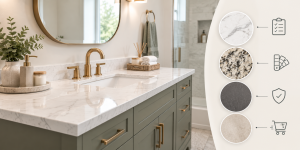
Living on Bainbridge Island means accepting a simple reality: your home exists in one of the Pacific Northwest’s most moisture-intensive environments. With 44 inches of annual rainfall, humidity consistently near 79%, and a marine atmosphere that never truly dries, every flooring material faces a relentless test. Porous materials break down silently. Subfloors rot from within, mold grows in places you can’t see, and what seems like a small problem turns into a big one that needs major repairs. The question isn’t whether moisture will reach your floors; it’s whether your flooring can withstand it. Waterproof Tile Flooring becomes a must for homes built there.
At Silver Bo Stone, we’ve spent nearly 24 years helping homeowners across Bainbridge Island, Silverdale, Bremerton, and the surrounding Kitsap region choose waterproof tile flooring built for exactly this climate.
This guide covers the materials, installation zones, design directions, and maintenance practices that genuinely perform in Bainbridge Island’s coastal conditions, so you can make a flooring decision you won’t revisit in five years.
Why Waterproof Flooring Matters in Bainbridge Island
Bainbridge Island receives precipitation roughly 157 days per year, surrounded by saltwater on all sides. The real threat isn’t the water you can see, it’s vapor. Grout joints and seams let in humid air, which then condenses on the subfloor and creates the perfect environment for mold to grow deep inside your home’s structure. Once that happens, remediation becomes invasive and structurally disruptive.
Moisture-resistant flooring is the practical baseline for any Bainbridge Island home. Among all available options, waterproof tile flooring is genuinely impervious at the surface, requires no hidden waterproof additives, and remains unaffected by sustained humidity or salt air, year after year.
The floor you ignore today is the renovation you’ll be forced to do tomorrow. On Bainbridge Island’s coast, moisture doesn’t wait.
Best Waterproof Tile Flooring Materials
Density, water absorption rate, and installation precision determine whether a coastal home flooring system lasts a decade or four. Here’s how the leading materials compare.
Porcelain Tile: The Coastal Performance Standard
Porcelain tile’s waterproof performance comes from how it’s manufactured, not just how it’s finished. When heated to over 2,300°F, porcelain fuses into a dense, almost impermeable material that absorbs less than 0.5% of water, compared to 3% or more for regular ceramic. Moisture simply cannot penetrate the tile body itself.
For durable flooring for humid climates, this distinction is critical. Salt air accelerates degradation in any material that retains even trace moisture. Large-format porcelain (24″x24″ or larger) reduces the number of grout lines, limiting potential moisture infiltration points, a technical advantage that matters in high-humidity coastal installations.
Ceramic Tile: Versatile Within the Right Spaces
Ceramic tile flooring is successfully used by Bainbridge homeowners in interior walls, kitchen backsplashes, and lower-traffic rooms. Glazed ceramic provides solid surface water resistance, but its higher porosity compared to porcelain demands more frequent grout maintenance. The glaze is what protects the piece. If it gets damaged, the porous clay body underneath absorbs moisture directly. When deciding where to put something, you need to think about how vulnerable it is in a coastal area.
| Feature | Porcelain | Glazed Ceramic |
| Water Absorption Rate | ≤ 0.5% | 0.5%–3%+ |
| Best For | Floors, wet areas, exteriors | Walls, backsplashes, low-traffic floors |
| Salt Air Resistance | Excellent | Good with consistent sealing |
| Grout Sealing Frequency | Every 2–3 years | Every 1–2 years |
Slip Resistance: A Safety Specification, Not a Feature
Slip-resistant tile flooring is a specification that coastal homeowners cannot afford to treat as secondary. Wet feet from the beach, rain gear at the door, and steam-heavy bathrooms are daily realities on Bainbridge Island. The ANSI A326.3 standard requires a minimum DCOF (Dynamic Coefficient of Friction) of 0.42 for wet interior floors. For shower floors, mudrooms, and areas next to the outdoors, aiming for 0.60 or higher adds a lot of safety. Matte and textured porcelain finishes always have better traction in wet areas than polished surfaces.
Ideal Areas for Waterproof Tile Installation
Coastal home flooring planning should prioritize wherever moisture originates, not just where it’s visible.
Bathrooms are the obvious starting point for bathroom tile ideas that coastal homes require. In this case, full wet-area coverage is important: in showers, the grout should be sealed at installation and then resealed every year.
Entryways and mudrooms carry the heaviest moisture load per square foot of any room in a coastal home. Rain gear, wet boots, and ferry-trip arrivals deposit water directly onto the entry floor daily. Tile installation in Bainbridge Island homes near the waterfront should treat the entryway with the same specification priority as any bathroom.
Kitchens deal with steam, spills, and cleaning moisture daily, where ceramic tile flooring in Bainbridge kitchens handles well with glazed options and properly sealed grout.
Laundry rooms are frequently overlooked. A slow drain leak or supply line failure on any non-tile flooring causes immediate subfloor damage. Waterproof tile flooring here is straightforward, practical protection.
Design Ideas for Coastal-Inspired Tile Flooring
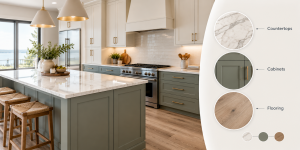
Contemporary coastal home flooring on Bainbridge Island draws from the Pacific Northwest’s natural palette without replicating it literally. The goal is refined, not themed.
- Driftwood-toned matte porcelain planks deliver the warmth of wood without moisture vulnerability
- Soft grey-green large-format tiles echo Puget Sound’s palette while keeping spaces visually open
- Honed stone-look porcelain in sandstone or slate tones bridges coastal and organic aesthetics
- White or light tiles with contrasting grout lines add architectural definition without visual noise
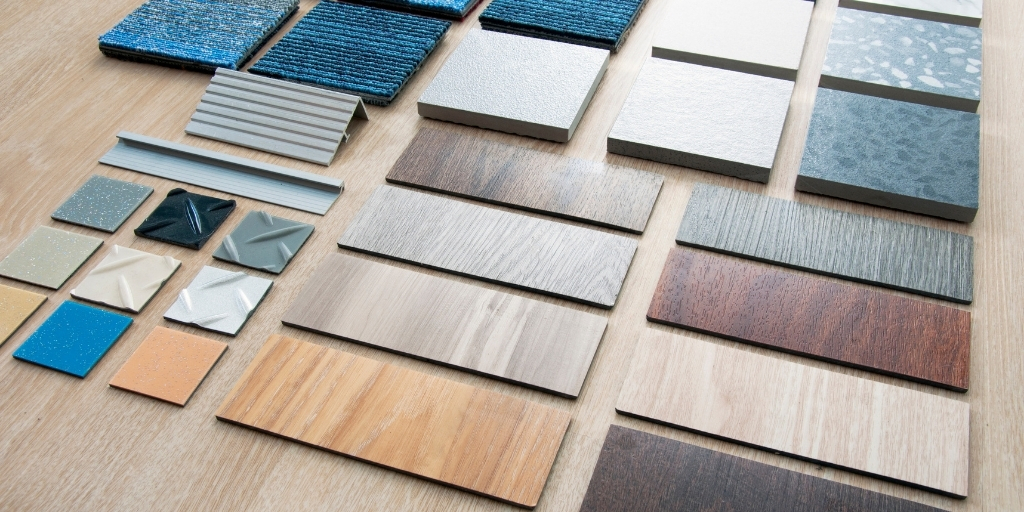
One detail most homeowners overlook: tile undertones behave differently in Bainbridge Island’s overcast winter light. Warm-toned tiles balance things out on their own, but cool-grey finishes can make rooms feel heavier when there isn’t much natural light. Testing full-size samples in your own space, which is easy to do in our showroom, takes away all the guesswork.
Maintenance Tips for Waterproof Tile Floors
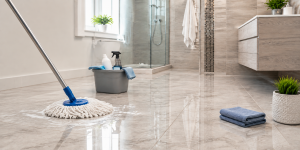
Tile flooring is low-maintenance by nature, but in a coastal environment, the grout deserves consistent attention. Grout is cement-based and naturally porous; unsealed grout in a humid setting absorbs moisture, darkens over time, and eventually supports mold growth even when the tiles on either side are fully waterproof.
What actually keeps a tile floor performing long-term:
- Seal grout at installation and reseal annually: This is the single highest-impact maintenance action for moisture-resistant flooring in a coastal climate
- Use only pH-neutral cleaners: Acidic products like vinegar degrade grout structure over time, even when used infrequently
- Inspect grout lines each season: Hairline cracks allow water to reach the subfloor even when tile surfaces are intact
- Avoid steam mops on natural stone accents: High-heat steam forces moisture into stone pores and can loosen adhesive bonds beneath the surface
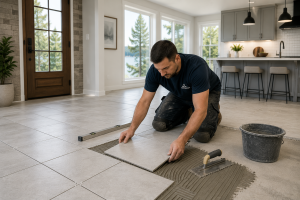
Proper installation quality matters as much as material choice. A tile floor that is properly installed, with a vapor barrier underneath and precise grout work throughout, will last longer than a careless installation of high-quality material.
Tile doesn’t fail. Installation shortcuts and ignored maintenance do. The best floor you’ll ever have is one installed the first time correctly.
Hiring Experts for Tile Flooring in Bainbridge Island
Choosing the right material is only half the equation. Tile installation in Bainbridge Island homes requires proper subfloor preparation, vapor barrier placement, moisture-rated adhesives, and grout work executed with precision, details that separate a floor lasting decades from one requiring early replacement.
At Silver Bo Stone, our team handles every stage, from design consultation to final installation, with close attention to the details that matter most. Our 4,000 sq. ft. showroom in Poulsbo, a short drive from Bainbridge Island, lets you see and compare tile flooring Bainbridge Island options in person, in natural Pacific Northwest light, before committing. We also offer square-foot pricing on many of our most popular porcelain and stone selections, so you pay for exactly what your project requires.
The Right Floor Protects Everything Above It
Waterproof tile flooring on Bainbridge Island is a decision rooted in climate reality. With 44 inches of annual rain, near-constant coastal humidity, and salt air working against every porous material in your home, porcelain tile waterproof performance, correctly installed slip-resistant tile flooring, and consistently sealed grout lines form the complete system that protects your home’s structure for decades.
At Silver Bo Stone, we’ve guided homeowners across Bainbridge Island, Silverdale, Bremerton, Poulsbo, and the surrounding Kitsap Peninsula through this decision with the material knowledge, regional experience, and installation expertise to get it right. Our tile flooring Bainbridge Island clients don’t return for repairs; they return with referrals.
Ready to protect your home with flooring built for this climate? Call us at (360) 297-4080 or visit our Poulsbo showroom to begin your consultation today.