Bathroom floors fail quietly, and by the time you notice, the damage is already serious. Most homeowners pick tile based on looks alone, completely skipping the specs that actually determine whether that floor will hold up against daily moisture, steam, and standing water. If you make the wrong choice, it won’t just look bad in a year; it will also warp, crack, and grow mold underneath the surface, which will eventually damage your subfloor. That’s not a cosmetic problem; that’s a structural one. At Silver Bo Stone, with 24 years of hands-on experience serving homeowners across the Pacific Northwest, we’ve seen what happens when the right material isn’t chosen from the start, and we help clients avoid exactly that.
This blog talks about the best types of the best tile flooring for wet bathrooms, including what to look for, what to stay away from, and the things that most people don’t think about at all.
Why Moisture Resistance Matters in Bathroom Flooring
Every day, the bathroom is humid, steamy, and splash-prone, not just sometimes. Humid bathroom flooring that isn’t built for this environment doesn’t just stain or discolor; it absorbs water, weakens structurally, and becomes a mold incubator. Moisture-damaged tiles crack from the inside out, and by the time the surface shows signs, the subfloor beneath is already compromised.
Proper bathroom floor water damage prevention starts at the material selection stage, not after the renovation is complete.
The moisture rating most homeowners ignore when choosing tiles
Every tile carries a water absorption rating. Anything above 3% absorption is classified as non-vitreous, which means it soaks up water like a sponge. Most homeowners never check this number. Tiles that are vitreous (0.5%–3%) or impervious (<0.5%) are best for wet bathrooms. One of the most common and expensive mistakes we see is picking based only on color and price and ignoring this spec.
Porcelain Tile: The Gold Standard for Wet Bathrooms
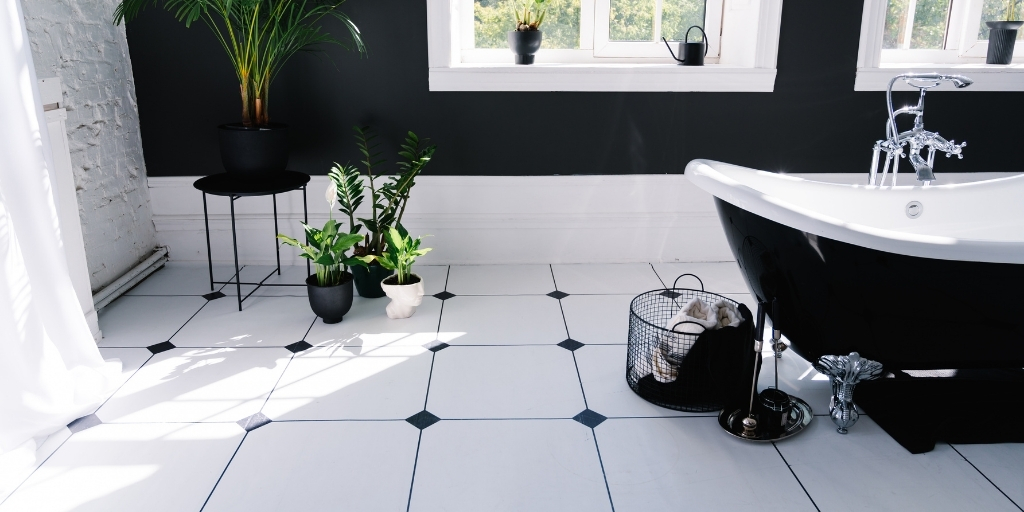
Porcelain is fired at temperatures that compress the clay to near-impervious density. Its water absorption rate sits below 0.5%, which is why it dominates professional bathroom renovations. It handles daily steam, heavy foot traffic, and standing water without degrading.
Available in wood, stone, and concrete finishes, it’s a water-resistant flooring option, so you don’t have to give up design. If you want something that will last a long time, porcelain is the way to go.
Ceramic Tile: Affordable and Moisture-Friendly
A ceramic tile bathroom floor performs well in moderate-moisture areas when properly glazed. Glazed ceramic tiles have a coating that is fired on and protects the surface from water.
However, the tile body underneath the glaze is still porous. This is important. If the glaze chips or cracks, water can seep in. For wet zones like shower floors, unglazed ceramic is a risk. For general bathroom floors with consistent maintenance, it’s a solid budget bathroom tile choice.
| Feature | Ceramic | Porcelain |
| Water Absorption | Moderate | < 0.5% |
| Surface Sealing | Glaze-dependent | Inherent |
| Best Use | General bathroom floor | Wet zones & showers |
| Maintenance | Moderate | Low |
Natural Stone Tile: Beauty With Extra Care
Marble bathroom floor, slate tile bathroom, travertine, and natural stone bring a level of visual richness that manufactured tile rarely matches. But stone is porous by nature, and without consistent natural stone sealing, that beauty becomes a liability. Water penetrates, stains set in, and mold grows in microscopic crevices you’ll never be able to clean out.
The stone tile pros and cons bathroom conversation always comes down to one thing: commitment to upkeep. Sealing every year, using pH-neutral cleaners, and fixing grout cracks right away are all things that must be done. Natural stone is amazing for clients who are willing to do that. For those who aren’t, it becomes a very expensive problem.
Glass Tile: Stylish and Waterproof
Glass tile bathroom floor options are built on a simple advantage; glass is non-porous glass tile by nature. There are no pores for water to get in, no need to seal it, and moisture won’t damage the surface. Waterproof glass flooring also resists mold at the surface level in a way that grout-heavy floors cannot.
Glass mosaic floor tile works beautifully in showers and accent zones, and decorative bathroom tiles in glass finishes add light and dimension to smaller spaces. The caveat: smooth glass is slippery. Always choose frosted or textured finishes for floor applications.
Why do some bathroom tiles start failing within a year?
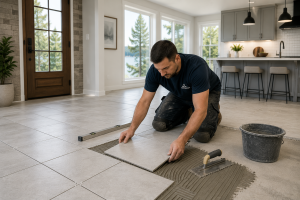
It’s not usually the tile itself. It’s the setup. If you don’t prepare the substrate correctly, use indoor-grade adhesive in a wet area, skip a waterproof membrane, or grout over hairline cracks, any of these shortcuts will cause the project to fail within a few months. A quality tile installed poorly will always underperform a mid-range tile installed correctly. Material choice matters, but so does who installs it.
Vinyl Tile (LVT): A Budget-Friendly Waterproof Option
Luxury vinyl tile bathroom flooring has come a long way. Modern LVT waterproof flooring uses a fully waterproof core, not just a surface coating, which means spills and steam don’t threaten the material’s integrity. It’s warm underfoot, forgiving, and available in stone and wood looks that are difficult to distinguish from the real thing.
For homeowners in Silverdale, Bainbridge Island, and Bremerton working within a realistic renovation budget, LVT offers genuine waterproof performance without the cost of stone or porcelain. It’s not a compromise; it’s a practical decision.
What to Look for When Buying Tile for Wet Areas
Before buying any tile for a bathroom, these are the specs worth checking:
- Water absorption rate: Impervious or vitreous only for wet zones
- PEI rating: Minimum PEI 3 for floor applications
- DCOF (slip coefficient): 0.42 or higher for wet floors
- Finish: Matte and textured outperform gloss in wet areas
- Tile size: Smaller tiles = more grout lines = more traction
Slip Resistance: A Non-Negotiable for Bathroom Safety
Slip resistance rating tile standards exist for a reason; wet floors are a genuine hazard. The DCOF rating (Dynamic Coefficient of Friction) measures how much grip a tile offers when wet. A score of 0.42 or higher is the minimum standard for wet area floors.
Slip-resistant bathroom tile options include textured tile flooring, matte finishes, and mosaic layouts where additional grout lines naturally increase traction. An anti-slip bathroom floor isn’t a design limitation; modern textured tiles are available in every aesthetic from industrial to spa-inspired. Wet area tile safety is a specification, not an afterthought.
Best Grout Types for High-Moisture Bathrooms
Most bathrooms lose the battle against moisture in the grout. Standard cement grout is porous, so if you don’t seal it properly, it will soak up water, change color, and grow mold, no matter how good the tile around it is.
| Grout Type | Water Resistance | Mold Resistance | Best Application |
| Epoxy grout bathroom | Excellent | Excellent | Showers, wet floors |
| Polymer-modified cement | High | Good | General bathroom use |
| Standard cement (sealed) | Moderate | Moderate | Low-moisture areas only |
Epoxy grout bathroom applications are the professional standard for wet zones. It requires no sealing and won’t support mold growth. Waterproof grout for shower applications should always be epoxy or polymer-modified. Mould-resistant grout is the best grout for wet area installations; it’s not a premium upgrade; it’s a baseline requirement.
Maintenance Tips to Keep Bathroom Tiles Mold-Free
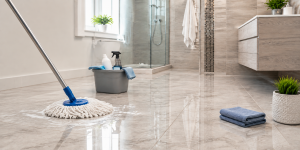
It’s not bad cleaning that makes mold grow between bathroom tiles; it’s bad ventilation and grout that lets air through. Mold can grow slowly and steadily when there is moisture left in grout joints after every shower.
- Run the exhaust fan for at least 15 minutes after every shower
- Squeegee the floor after use to eliminate standing water
- Clean grout lines monthly with a pH-neutral cleaner
- Reseal natural stone annually skipping even one cycle invites damage
- Inspect grout for hairline cracks twice a year and repair immediately
It only takes a few minutes to do these things. If you don’t pay attention to them, you’ll have to deal with mold removal, replacing the subfloor, and re-tiling, which all cost a lot more than preventing them.
Making the Right Choice Before the Water Damage Does It for You
Porcelain, ceramic, natural stone, glass, and LVT are all good materials for a well-designed bathroom. It all comes down to choosing the right material for the right environment, installing it correctly, and maintaining it regularly. That’s the difference between a floor that lasts for decades and one that fails in a year. Problems start when you skip steps at any of those points. A waterproof bathroom floor isn’t just an aesthetic decision; it’s a structural investment in your home.
At Silver Bo Stone, we bring 24 years of expertise in tile flooring, stone, and design to every project we take on. Our 4,000 sq. ft. showroom in Poulsbo lets you see and feel every material in person, not just swipe through images online.
Our team works with homeowners on residential and commercial projects, guiding material selection, understanding moisture ratings, and ensuring every installation decision is made with long-term performance in mind. We proudly serve Silverdale, Bainbridge Island, Bremerton, and the surrounding region.
If your bathroom renovation is coming up, or if your current floor is already showing signs of wear, don’t wait until the damage reaches the subfloor. Reach out to our team today at (360) 297-4080 and let’s get your project started the right way.