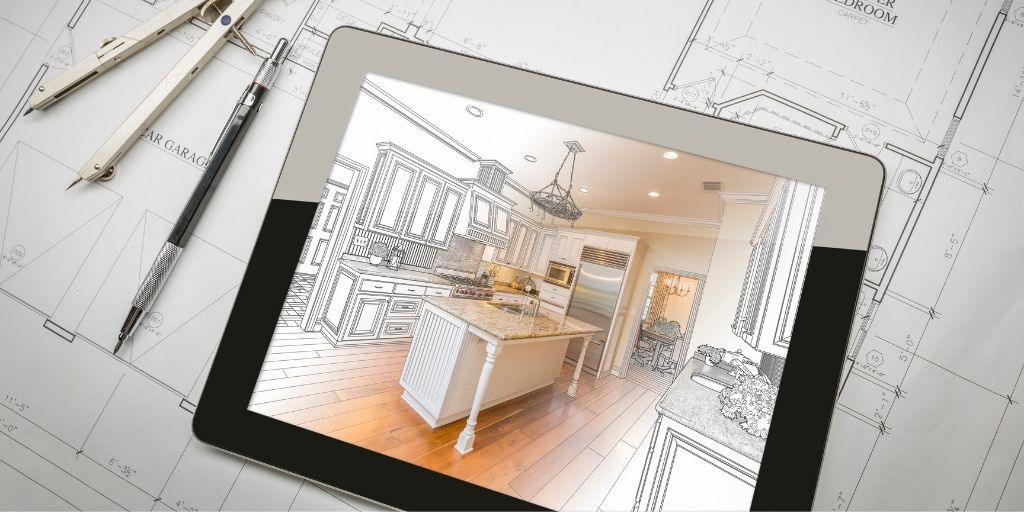
A kitchen’s layout directly affects how efficiently a family can cook, clean, and gather. In the Pacific Northwest, homes in Silverdale, Bremerton, and surrounding communities face unique challenges, including compact floor plans, high humidity, and frequent rainfall, which influence material choices and design decisions. Growing families require kitchens that accommodate everything from quick weekday breakfasts to weekend entertaining, all while making the most of every square feet.
Unfortunately, poorly planned layouts can lead to wasted space, disrupted workflow, and daily frustration. Without careful design, a kitchen remodel in Silverdale, Bremerton, and neighboring areas can result in inefficiency that impacts your family’s quality of life for years to come.
This guide provides a practical approach to creating a functional kitchen layout. We cover everything from optimizing the work triangle and maximizing storage to selecting the right appliances and designing smooth traffic flow. With these strategies, you can ensure your kitchen supports daily routines, improves efficiency, and meets the specific needs of your Pacific Northwest home.
Understanding the Work Triangle
The work triangle remains the foundation of efficient kitchen workflow planning, connecting your refrigerator, sink, and cooktop in a triangular arrangement. This time-tested concept ensures smooth movement between the three most frequently used areas in your kitchen, reducing unnecessary steps and creating a natural flow for meal preparation.
Optimal Triangle Measurements
The perfect work triangle should have a total length between 12 and 26 feet, with 4 to 9 feet on each side. By keeping everything within easy reach, these measurements also help to prevent the kitchen from feeling cramped.
When planning your modern kitchen planning strategy, consider these key factors:
- Distance matters: Too close creates congestion; too far creates inefficiency
- Clear pathways: Avoid placing peninsulas or islands that interrupt the triangle.
- Multiple cooks: For homes with several cooks, consider overlapping triangles
- Appliance placement: Place appliances in such a way as to support natural cooking sequences
Adapting the Triangle for Modern Needs
Today’s kitchens require a transformation to add the traditional triangle concept with a modern touch. Kitchen layout ideas now incorporate coffee stations, prep sinks, and specialized appliance zones that expand beyond the basic three-point system. We recommend creating zones that group related activities together while maintaining clear pathways between primary work areas.
Optimizing Storage Space
Kitchen storage solutions can significantly impact your cooking experience. It can easily transform it from being chaotic to being efficiently organized. Smart storage planning maximizes the use of every available square inch while keeping essential items within easy reach.
Vertical Storage Strategies
Without expanding the size of your kitchen, you can achieve amazing storage potential by maximizing the use of vertical spaces. Think about these space-saving kitchen tips:
Upper Cabinet Solutions:
- For optimal storage, raise cabinets to the ceiling
- Install pull-down shelving for hard-to-reach areas
- Use adjustable shelving to accommodate varying item heights
- Add interior cabinet lighting for better visibility
Wall-Mounted Options:
- Magnetic knife strips clear out valuable counter space
- Pegboard systems provide flexible tool organization.
- Frequently used items can be stylishly displayed on floating shelves.
- Rail systems with hooks accommodate utensils and towels
Smart Interior Cabinet Features
Modern cabinet interiors provide sophisticated and practical solutions for organizing your kitchen, transforming the way you access and store items. Pull-out drawers, lazy Susans, and specialized organizers that prevent items from getting lost in the back of deep cabinets.
| Storage Solution | Best Use | Space Saved |
| Pull-out drawers | Base cabinets | 40-60% better access |
| Lazy Susans | Corner cabinets | Eliminates dead space |
| Drawer dividers | Utensil organization | 70% more efficient |
| Spice pull-outs | Narrow cabinets | Doubles capacity |
Choosing the Right Appliances
Appliance selection has a significant impact on the functionality of your kitchen and your overall kitchen renovation ideas. The right appliances enhance your cooking experience while fitting seamlessly into your available space and lifestyle requirements.
Size and Scale Considerations
Ergonomic kitchen design principles guide decisions on appliance placement and sizing. Counter-depth refrigerators offer less storage space, but they have cleaner lines, whereas standard-depth refrigerators may not fit in every space. Consider your family size, cooking habits, and space constraints when making these important decisions.
Energy Efficiency and Performance
In addition to providing better performance, modern appliances offer remarkable energy efficiency that lowers operating costs. Energy Star-certified appliances use 10-50% less energy than regular models, resulting in long-term savings that balance out the higher initial investment.
Key Appliance Planning Tips:
- Measure carefully before purchasing to ensure proper fit
- For smooth integration, evaluate built-in options.
- For all cooking appliances, plan sufficient ventilation
- Take into account the clearances for drawer extensions and door swings.
- Carefully check reliability ratings and warranty coverage.
Maximizing Counter Space
When you have ample counter space, you can transform your cooking from a stressful chore into a pleasurable experience. Creative solutions that increase the available cooking space and other areas without requiring significant structural changes are the major focus of small kitchen layout tips.
Strategic Counter Extensions
Rolling carts, breakfast bars, and peninsula editions offer versatile workspace options that can be adjusted to meet evolving needs. These additions often solve two purposes: they increase your prep area and also provide storage underneath.
Multi-Level Work Surfaces
The counter height can be adjusted to better suit various tasks and users. Standard 36-inch counters are appropriate for most adults, but adding a 42-inch bar height section allows taller family members to stand while having a casual dining space.
Counter Space Optimization:
- Place daily essentials in their proper zones
- To conceal small appliances, use appliance garages.
- For additional prep space, install cutting board pull-outs.
- For a more versatile workspace, think about using movable islands.
Designing for Traffic Flow
Even during busy times, a smooth traffic flow ensures that your kitchen operates efficiently and avoids bottlenecks. Understanding how your family moves through the space helps us create kitchen layout ideas that accommodate multiple users without creating chaos.
Primary and Secondary Pathways
Primary pathways connect the kitchen to adjacent rooms and should remain clear at all times. These main routes typically measure 44-48 inches wide to accommodate wheelchair access and allow multiple people to pass simultaneously.
Work zones, when connected by secondary pathways in the kitchen, should have a minimum width of 36 inches. These internal pathways enable smooth and comfortable movement between the sink, cooking areas, and refrigerator.
Island and Peninsula Placement
Kitchen islands provide valuable storage and workspace, but require careful positioning to maintain their functionality. Usually, 42 inches of space around islands is enough, but with the kitchen that has multiple cooks, 42 inches is ideal.
Traffic Flow Guidelines:
- Avoid placing islands directly in main pathways
- Ensure dishwasher and oven doors don’t block traffic when open
- Position tall appliances away from primary walking routes
- Create clear sight lines between key areas
Family Activity Zones
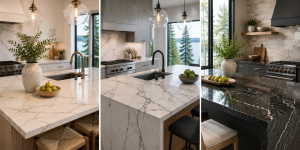
Along with cooking, modern kitchens often accommodate family get-togethers, casual dining, and normal homework. Assigning specific zones for these activities maintains the kitchen’s function during family gatherings and prevents disruptions during meal preparation. Our experts are here to help you choose the perfect quartz stone countertop
Conclusion
Creating a functional kitchen layout really comes down to understanding how you and your family actually use the space every single day. From the foundational work triangle that connects your main cooking areas to smart kitchen storage solutions that keep everything organized, every single decision you make impacts how smoothly your daily routines flow. The best functional kitchen design doesn’t just look amazing, it makes your life easier by supporting natural movement patterns and keeping everything you need within easy reach. Whether you’re implementing efficient kitchen workflow principles or finding clever space-saving kitchen tips for a smaller area, the goal stays the same: creating a kitchen that feels like it was designed specifically for how your family lives and cooks.
At Silver Bo Stone, we’ve been helping local families create beautiful, functional kitchens for years, and we understand exactly what works in our Pacific Northwest homes. Our team understands how to address the unique challenges of kitchen renovation ideas in this area, from working with smaller spaces to selecting the right materials. When you’re ready for your kitchen remodel in Bremerton, Silverdale, or neighboring locations, we’ll help you design practical kitchen organization solutions and ergonomic kitchen design features that make sense for your lifestyle.
Ready to get started on your dream kitchen with Silver Bo Stone? Call us at (360) 297-4080 to schedule your design consultation. Let’s work together to create a kitchen that’s not just beautiful, but also perfectly suited for your family’s daily life.